Plastic Recyclates, PIR vs. PCR and the Challenges of Recycling
What are plastic recyclates?
Plastic recyclates are secondary raw materials obtained from used plastic waste through mechanical or chemical recycling. They partially or fully replace virgin material made from fossil resources and form the backbone of a working circular economy.
The industry generally distinguishes between two main categories, PIR (Post-Industrial Recyclate) and PCR (Post-Consumer Recyclate). Both groups differ significantly in origin, quality and field of application, which has a direct impact on price and processability.
PIR and PCR side by side
PIR comes from production waste generated directly inside the plant, such as sprues, edge trim, start-up parts or rejects from ongoing manufacturing. Since this material is neither contaminated nor in contact with end consumers, its quality is very close to virgin material.
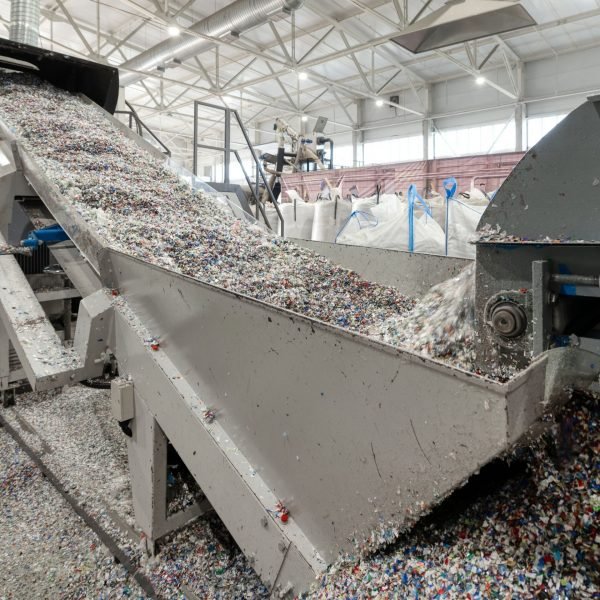
PCR, on the other hand, comes from household and commercial waste, meaning collection systems, kerbside recycling and commercial disposal. Before reuse, these fractions need to be collected, sorted, washed and granulated by polymer type. This is where the biggest challenges sit.
| Criterion | PIR | PCR |
|---|---|---|
| Origin | Production waste from plastic processing, sorted by polymer | Household and commercial waste after use by end consumers |
| Quality | Consistent, close to virgin material, defined material data | Variable, contaminants, residual odours, shortened polymer chains |
| Availability | Limited, depends on production volume of individual plants | High, large volumes available from DACH collection systems |
| Application | High-grade components, technical applications, visible products | Non-food packaging, logistics, construction, second-tier consumer goods |
Challenges of plastic recycling
Recycling sounds simple in theory, in practice it is a complex process with clear technical limits. Anyone who wants to use recyclates effectively needs to understand and plan for these challenges.
- Sorting, mixed plastic streams must be separated by polymer type before they can be used at all
- Quality loss, every processing cycle shortens the polymer chains and reduces mechanical properties
- Contamination, labels, adhesives, printing inks and foreign polymers disturb the processing
- Residual odours, especially PCR from packaging carries odour loads from the original content
- Cost, processing is energy- and process-intensive, which narrows the price advantage over virgin material
- Regulation, food contact applications follow strict rules that exclude most PCR streams
Advantages of plastic recyclates
| Dimension | Benefit |
|---|---|
| Resources | Conservation of fossil raw materials, less crude oil per ton of plastic |
| Carbon footprint | Significantly lower emissions compared to virgin production |
| Waste | Less landfill and incineration, higher recovery rates |
| Regulation | Compliance with recyclate quotas under the EU Packaging Regulation |
| Brand image | Credible sustainability communication towards customers and retail |
Disadvantages and limits
| Weakness | Consequence for use |
|---|---|
| Variable quality | Higher testing and parameter tuning effort in processing |
| Odour load | Acceptance issues in consumer goods and packaging applications |
| Mechanical properties | Reduced strength, lower load capacity than virgin material |
| Colour | Grey to brown shades from mixed colours, bright colours hardly possible |
| Food contact | Severely restricted, not approved in many applications |
Perspectives for the circular economy
The direction is set, politically and economically. The EU Packaging Regulation, mandatory recyclate quotas and rising raw material prices are turning recyclates from a niche option into a standard material. Anyone investing today in stable PCR supply chains and the required processing technology secures a clear competitive advantage tomorrow.
At the same time it is clear that recyclates will only be used at scale if the quality holds up. This applies to mechanics, purity and especially sensory properties like odour. This is exactly where research will focus in the coming years, with better sorting technologies, new processing methods and targeted additives.
Conclusion
PIR and PCR are not competitors, they are two tools in the same toolbox. PIR delivers consistent quality for high-grade applications, PCR provides the volume needed for a real circular economy. Combining both strategically reduces material costs, meets regulatory quotas and strengthens the sustainability story of the brand.
The biggest lever in the PCR segment is odour binding. This is where BIOAFFIN KAD comes in, a patented odour binder that actively binds residual odours from recycled plastics and makes PCR usable for more demanding applications. Anyone serious about using recyclates should plan odour management in from day one.