Biobased Bioplastics, Biodegradable, Home Compostable or Industrially Compostable?
What are biobased bioplastics?
Biobased bioplastics are made from renewable raw materials such as corn starch, sugar cane, cellulose or plant-based oils. They replace fossil feedstocks like crude oil and therefore reduce the CO2 footprint of the finished material.
One distinction needs to be made right at the start: biobased only describes the origin of the raw material, not the end of life. A biobased plastic can be just as persistent as a petroleum-based one if it has not been specifically formulated for biological breakdown.
The meaning of "biodegradable"
Biodegradable means that microorganisms such as bacteria, fungi and algae can break the material down into its natural components, leaving water, CO2 and biomass. The conditions under which this breakdown takes place are decisive.
This is where most of the confusion arises in practice. Biodegradable does not automatically mean home compostable, and not every compostable plastic breaks down in a garden compost. That is why there are clear standards and certificates defining the conditions and timeframes within which a material must fully decompose.
Home compostable, what it really means
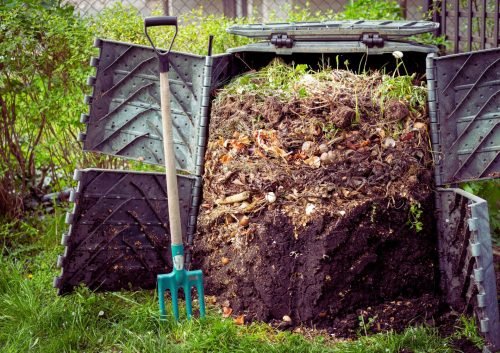
Home compostable means that a material breaks down on a private compost heap under regular ambient temperatures. There are no industrial conditions here, temperatures typically range from 20 to 30 degrees Celsius, and the biological process runs more slowly.
The most important label in this area is "OK compost HOME" by TÜV Austria. A material carrying this certificate must break down by at least 90 percent into its natural components within about twelve months under home compost conditions, with no ecotoxic residues left behind.
For consumers, this label is the most reliable indicator that a product may actually be composted in their own bin, not in residual waste, not in plastic recycling.
Industrial composting, controlled conditions
Industrially compostable plastics require the controlled conditions of an industrial composting facility. These plants reach temperatures of around 58 degrees Celsius for several weeks, combined with high humidity, controlled aeration and constant microbial activity.
The relevant standard is EN 13432. It requires a material to sufficiently disintegrate within twelve weeks and to biodegrade by at least 90 percent within six months under industrial compost conditions. Certificates such as "OK compost INDUSTRIAL" or the "Keimling" seal by DIN CERTCO are based on this standard.
Important to know: a material certified only under EN 13432 does not belong in a home compost. The conditions there are not sufficient to trigger breakdown within a reasonable timeframe.
| Criterion | Home compostable | Industrially compostable |
|---|---|---|
| Temperature | approx. 20 to 30 °C, ambient climate | approx. 58 °C, controlled process |
| Duration | up to 12 months for full breakdown | disintegration in 12 weeks, breakdown in 6 months |
| Infrastructure | private garden or home composter | industrial composting facility |
| Certificate | OK compost HOME (TÜV Austria) | EN 13432, OK compost INDUSTRIAL, Keimling |
What consumers should look out for
Anyone buying compostable packaging or products should not rely on buzzwords like "bio" or "sustainable", but actively look for certificates.
- OK compost HOME proves home compostability, the product belongs in your own compost bin.
- EN 13432 or OK compost INDUSTRIAL means industrially compostable, the product goes into organic waste collection where local schemes accept it.
- Terms like "biobased" or "biological" without a certificate say nothing about end of life, they only describe the origin.
- When in doubt, check the manufacturer information, serious suppliers list both the certificate and the test number.
Conclusion
Biobased, biodegradable, home compostable or industrially compostable, these are four very different statements about a material. Telling them apart leads to better purchasing decisions and prevents compostable products from ending up in the wrong waste stream.
Our compound comp I verde is an example of a bioplastic that is not only biobased but also certified to OK compost HOME. It is therefore suitable for applications where the product may end up in a private composter at the end of its life, from flower pots to single-use garden articles. Talk to us if you are looking for the right material for your application.